Address
304 North Cardinal
St. Dorchester Center, MA 02124
Work Hours
Monday to Friday: 7AM - 7PM
Weekend: 10AM - 5PM
 Skip to content
Address
304 North Cardinal
St. Dorchester Center, MA 02124
Work Hours
Monday to Friday: 7AM - 7PM
Weekend: 10AM - 5PM
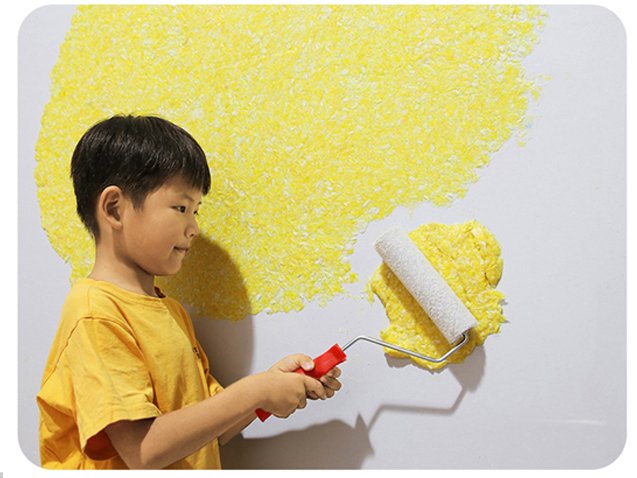
The greatest advantage of silk plaster is that it can be repaired easily without having to reapply the entire surface. After the repair, the marks are almost invisible. The prerequisite is to retain a little of the same batch reserve material. Different batches may have color differences.
Important reminder: Be sure to keep a small package of the remaining dry material after the renovation, seal it and store it dry. This is the key for later repairs.
Common floating dust and slight dirt
Use a soft brush head of a vacuum cleaner, or a chicken feather duster, or a dry cloth to gently sweep off.
Do not rub vigorously back and forth, to avoid the fibers getting frayed.
Common stains (handprints, coffee, beverages, not deeply penetrating)
1 Spray the stain area with warm water from a spray bottle, slightly moisten, do not let it run in large amounts.
2 Use a clean wet sponge or wet cloth, gently press and absorb the stain, do not rub back and forth, rubbing back and forth will cause the fibers to be messed up and frayed.
3 Let it dry naturally, do not blow with a hair dryer or air conditioner forcefully.
Most light stains can be removed; stubborn stains that have penetrated deeply are difficult to completely remove, use the following repair method.
Severe stains, ink, oil stains, cigarette burn marks
These stains have penetrated into the fibers and cannot be wiped clean. Local repair directly:
1 Spray warm water on the damaged area to fully moisten it;
2. Use a scraper to scrape off the entire old wall coating, clean the base layer;
3 Take out the reserved silk wall plaster dry material , add water to soak it normally;
4 Thinly apply it on the scraped area, the thickness should be consistent with the surrounding area;
5 Use a roller brush to gently roll along the original texture, aligning with the surrounding texture;
6 Let it dry naturally, it should be basically invisible after drying completely.
Bump damage, small cracks, local bulging and detachment
1 Soak the damaged area with water, remove all loose and detached silk wall plaster, expose the primer layer;
2 If the base layer of the wall has cracks, first apply putty, dry and apply a coat of sealing primer;
3 Soak the reserved silk wall plaster, apply a thin layer of repair directly, the texture should be consistent with the surrounding area;
4 Let it dry naturally.
Mildew (caused by dampness)
1 First solve the root cause: ventilate and dehumidify, otherwise it will recur.
2 Remove all the moldy silk wall plaster;
3 Do dehumidification treatment on the base layer, dry and apply a coat of sealing primer;
4 Apply new wall coating again.
Regular silk wall plaster is not suitable for high-humidity shower areas, can only be used in the dry area of the bathroom.
Common pitfalls in repair
1 No reserved material of the same batch: It is difficult to achieve exactly the same color, only try to be as close as possible, there will be a slight color difference, so after the renovation, be sure to keep the material sealed and stored.
2 The applied material is too thick during repair: It is prone to shrinkage and cracking, the thickness should be consistent with the original wall surface 1.5-2mm.
3 After repair, use a hair dryer or hot air to dry: Rapid water loss will cause cracking.
4 Do not mix silk wall plaster of different brands, the fiber thickness and color are different.
What if there was no reserved material originally
1 Contact the original purchasing merchant, try to find the same color number and batch;
2 If you can’t find it, you can only do small-area repair, there will be a color difference;
3 If the color difference is obvious, you can only redo the entire surface.
 Optimized by Seraphinite Accelerator
